Friday, September 29, 2023

Gone With The Wind Movie Reflection

     My review of the movie Gone With The Wind is, that it really shows the growth of theater and the rights of women. In the movie, there are characters that are women who play the main roles. This is a big deal considering women being actors was frowned upon for years. Historical the movie showed a good point of view of how people felt about the war and how men acted toward war. It also hits on the point of how much power men possessed in deciding. The historical concept of the movie shows how towns were affected for armies would march through and destroy towns by cannon fire. Overall it shows the South's perspective as civilians, women, men, soldiers, and life as a Southerner. The movie Gone With The Wind also depicts the art and furniture for how buildings like homes or stores had a piece of artwork or artwork in every room to tie things together. The movie, also demonstrated how some slaves, house slaves in particular had freedom due to raising the children for the children sought them out to be like a mother, if not a second mother to them. This was due to the fact that the child grows attached to the house slave caretaker throughout the years the child is being raised. There was also a huge number of black people that were in bars that also had white people in them and blacks were also seen with whites in buildings as well. This also comes to show how black people are also in movies around this time. In older movies, black people were not seen, not only black people were not seen but also blacked faced due to certain laws. Some scenes in the movie Gone With The depict the overall tone of the English language back then versus now.


Thursday, September 28, 2023

EOTO Refelction

 Group 1

Missouri Compromise

The Louisiana Purchase had created a frenzy to move west 

1817- Missouri first applied for slave-hood

Half of the 22 states were free and half were slave states 

        Compromise that would admit Maine as a free state and Missouri as a slave state while also prohibiting slavery North of 36,30.

Kansas Nebraska Act

Bill proposed and designed to replace and repeal the Missouri Compromise line 

Bill proposed and designed by Illinois Senator Stephen Douglas 

Nebraska bill was passed 37-14 in the Senate and increased slavery in the US and its territories.

This expanded slavery in the territories and allowed them to decide on slavery 

Fugitive Slave Act Of 1850 

Bounties and reward systems were put into place

Made the government responsible for returning slaves

Bleeding Kansas 

Was a deadly outcome of the Kansas-Nebraska Act of 1854

During Bleeding Kansas murder, mayhem, destruction, and psychological warfare became a code of conduct in Eastern Kansas and Western Missouri 

Dred Scott V. Stanford

Dred Scott was a slave who lived in both freed and slave states

Created a decision between the Northern and Southern states

The Election Of 1860

Abraham Lincoln won the election over popular vote


Group 2 

The Underground Railroad

Was made to help enslaved individuals escape to freedom

Ran through homes, roads, rivers, bays, etc.

Was helped by multiple people

Election of 1860

Was between Abraham Lincoln, John Breckinridge, John Bell, and Stephen A. Douglass

American Anti-Slavery Society

Was an abolitionist society founded by William Lloyd Garrison, Arthur Tappan, and Fredrick Douglas, this lasted from 1833 to 1870.

Fugitive Slave Act

Also known as the Fugitive Slave Law

Passed on Sept. 18th, 1850 

Part of the Compromise of 1850

Officials who did not arrest slaves who ran away were fined $1,000

Revoked June 1864


Mock Trial 1 Reflection Mann

 Reflection On The Side Of Mann Presentation

Historical Overview- In the 1820’s there was a lot of tension between abolished states. The 3/5ths compromise means that African Americans were 3/5ths of a person meaning the more slaves the South had the higher power they held. They also gave slaves little to know rights and were seen as property. The overall debate over State V. Mann is whether are slaves people or property.

Religious Argument- According to the Bible, he is justified for his actions and Lydia is not.

Historic view- During the time period, John Mann should have been innocent due to him simply having power over what slaves could and couldn’t do. It was also a crime for slaves to travel without permission from their masters. Thus having John Mann shoot her was him acting responsibly.

Economy- Slavery was the backbone of the economy. Without slavery, the economy would fall apart.

    In my point of view, the economic standpoint wasn’t as strong although slavery was highly profitable, it had a negative impact on the Southern economy. It slowed the development of industry and cities and contributed to high debts, soil exhaustion, and a lack of technological innovation. The South and other slave-owning states did not develop urban centers for commerce, finance, and industry. Southern cities were small because they failed to develop diversified economies, unlike cities that were in the North. From the biblical standpoint a lot of the scriptures and points that mention slavery are missed. A lot of slave masters used certain scriptures for slavery and to keep slaves illiterate to preach false knowledge for slaves to believe that slavery was just. From the historical view, it was a time period when they had done things to slaves in check that were brutal. At the same time it wasn’t his slave but Elizabeth's slave so it made it out to be not his property. Therefore it wasn’t his right to shoot her.


Wednesday, September 27, 2023

State V. Man Economics Argue On Slavery

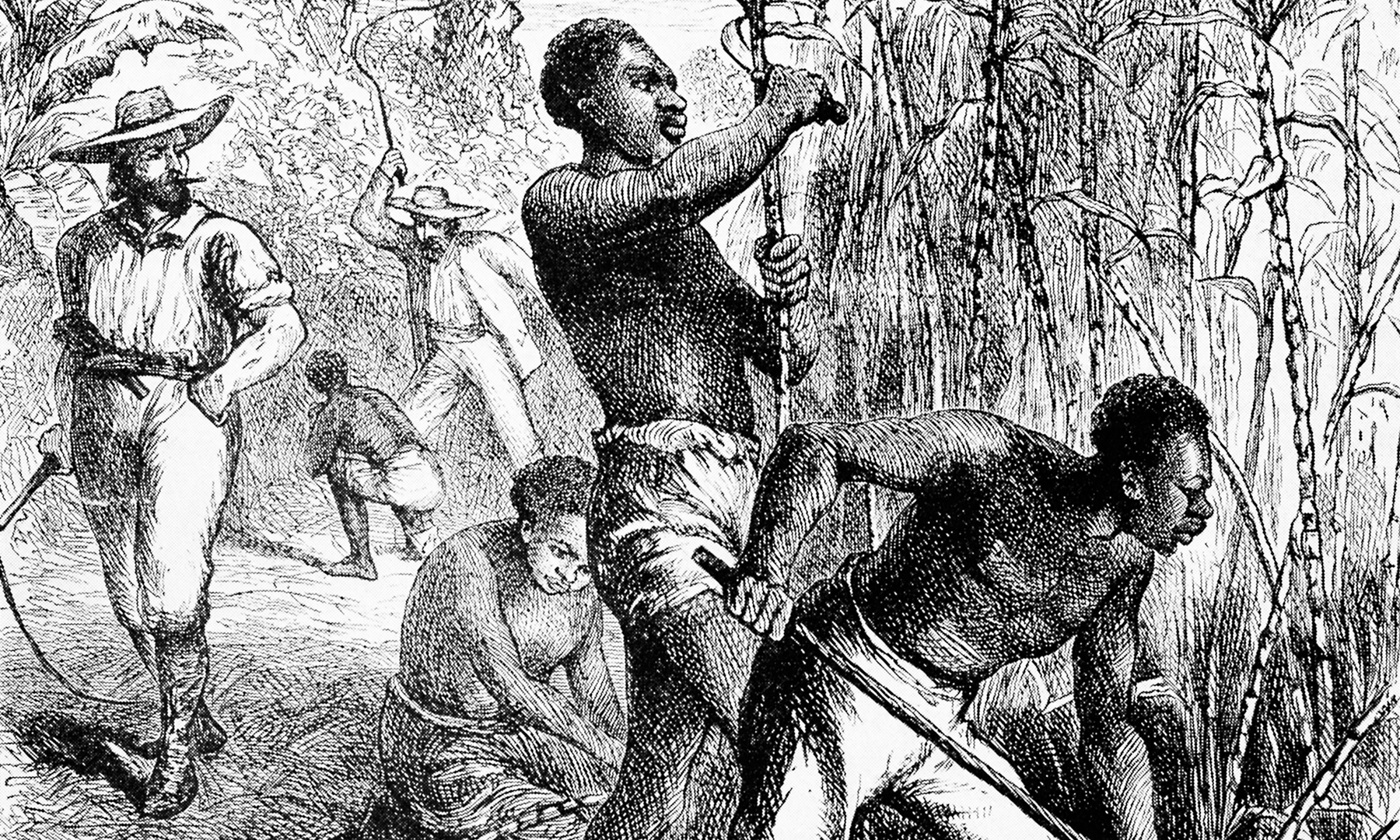
        Slavery, what is slavery, slavery is a condition in which a human being is owned by another human. A slave is considered by law as property and deprived of most of the rights that are held by free people. If slaves are supposed to help the economy and be valuable why are they killed, mistreated, beaten, raped, and overall abused? If slavery is an economically effective system of production that can or should be adaptable to tasks ranging from mining, construction, and factory work why are they not given proper treatment and equipment for these conditions? If slaves are supposed to help the economy and be valuable, why are they not held higher in respect? If slaves are treated in such ways then shouldn’t slavery be seen as another way of human abuse and trafficking? There have been many cases where slaves have been forced to bear children for their masters without consent. There have also been many cases where slaves get poor living conditions and are expected to work the next day with extreme bruises and injuries. 

   Although slavery was highly profitable, it harmed the Southern economy. It slowed the development of industry and cities and contributed to high debts, soil exhaustion, and a lack of technological innovation. The South and other slave-owning states did not develop urban centers for commerce, finance, and industry. Southern cities were small because they failed to develop diversified economies, unlike cities that were in the North. Southern cities rarely became processed or finished for they aren’t as open to different cultures, and southern ports rarely engaged in international trade. Since there were high rates of personal debt, Southern states kept taxation and government spending at much lower levels than the states in the North. As a result, Southerners lagged far behind Northerners in their support for public education. Illiteracy was widespread across the South. In 1850, 20 percent of all southern white adults could not read or write. The majority of the South had slave-based agriculture. Southerners neglected industry and transportation improvements. As a result, manufacturing and transportation lagged far behind in comparison to the North.

    Slaves were not able to learn how to read or write leaving an educational gap in the economy. This meant that slaves were kept unaware of knowledge besides speech. The majority of slaves were also not able to have religious practices without the permission of the master and were overseen by whites. This means that masters have the right to restrict the freedom of religious practice which is under the six of freedom they can also stop the assembly of slaves as well. 

    Slavery should not be tolerated as slavery does not help the reputation of the United States but crushes the reputation of the United States. Slavery shows how white people took advantage of a race they could not understand because of the color of their skin. This would make people from foreign countries want to stay away from the U.S. Slavery as a whole has left an emotional hole in society. 

Links: 

https://www.digitalhistory.uh.edu/disp_textbook.cfm?smtid=2&psid=3558 

https://emergingcivilwar.com/2019/04/26/what-was-so-wrong-with-slavery/#:~:text=Slavery%20was%20very%20cruel%20to,%2C%20their%20sons%2C%20and%20overseers. 

https://mpra.ub.uni-muenchen.de/5869/ 

https://www.britannica.com/topic/slavery-sociology 

https://www.gilderlehrman.org/history-resources/teaching-resource/historical-context-was-slavery-engine-american-economic-growth#:~:text=Slavery%20was%20an%20economically%20efficient,producing%20enormous%20amounts%20of%20wealth. 

https://www.history.com/news/slavery-profitable-southern-economy#:~:text=The%20upshot%3A%20As%20cotton%20became,shipping%20industries%20also%20saw%20gains. 


Tuesday, September 19, 2023

Things I learned From Anti And Pro-Slavery Arguments(Town Hall)

 Pro-Slavery- 

Jefferson Davis: Has 113 slaves and treated them like real humans 

John C. Beckham: youngest vice president and uses religion to argue slavery and treats slaves with respect

George Hue: Worked in Law and believe that slavery was good for blacks

Abraham Lincoln: Mom died when 10

Debary Webster: 14 years as a senator

John C. Beckham: Fled the country

George Washington: Owns 250 slaves and does not discriminate on who is a slave on his land

  Preston Brookes: Supported the Kansas Nebraska Act 

Anti-Slavery-  

Sarah Parker: Gave her first speech at 16 and moved due to the school not accepting blacks

John Brown: Believes in war for a change to slavery and fought for a revolution but later failed and died

Meryn Ann Shad: Could not learn in Delaware and opened schools for black kids

Abraham Lincoln: made the nation born 1776 due to every man being treated equal and abolishing freedom

Nate Turner: Taught to read from masters son and marched into Jerusalem and killed slave owners 

William Floyd: Published Newspapers and started multiple anti slavery organizations 

Harry Stone: Writer 

Rev. Henry: escaped to New York and sheltered slaves at community church

Sojourner Truth: Spoke Dutch and gave birth to 6 total children and changed her name at the age of 45

Fredrick Douglass Role On Slavery (Town Hall)

 Bio 

I am Frederick Douglass, original name Frederick Augustus Washington Bailey, born February 1818, in Talbot county, Maryland, U.S. and escaped from slavery to New York City in 1838, later settling in New Bedford, Massachusetts. He then became a famous African American abolitionist, orator, newspaper publisher, and author. He later died February 20th, 1895, in  Washington, D.C. 


Things He Said 

 One of Douglass’s many speeches, “What to the Slave Is the Fourth of July?” was perhaps one of the most well-known. He detailed his signature positions in the U.S. Constitution that slavery is contrary to natural law, that blacks are self-evidently human and entitled to natural rights, and that slavery is inconsistent with the Constitution, American Republicanism, and Christian doctrine, and that it should be forcefully resisted. Frederick Douglass would continue to write books and give speeches to help inspire and hope to show the wrongs of slavery and the effects of slavery.  Frederick Douglass would continue to give speeches to help inspire and hope to show the wrongs of slavery and the effects of slavery. In many speeches Frederick Douglass would emphasize the declaration of independence and freedom among the people.


Things He Wrote 

Throughout Frederick Douglass' life he published three autobiographies. The first autobiography, The Narrative of the Life of Frederick Douglass, An American Slave, this pushed him to fame and initiated the abolitionist movement. However, with his identity known and in danger of being returned to slavery, he fled to Great Britain. Frederick Douglass would continue to write books to help inspire and hope to show the wrongs of slavery and the effects of slavery. In many books Frederick Douglass would include teachings about self-determination and courage. 


His Part Over Slavery 

Frederick Douglass had a huge role in abolishing slavery. In 1861, the nation erupted into civil war over the issue of slavery. Frederick Douglass worked to make sure that emancipation would be one of the war's outcomes. He recruited Black men to fight in the U.S. Army, including two of his own sons, who served in the famous 54th Massachusetts Volunteer Infantry. He wrote books and gave speeches that helped spread the word towards slavery and have people fight along his side. He was able to travel and deliver speeches, distribute pamphlets and get subscribers to the Liberator. He traveled the country for four years until 1845 when he found himself in a dangerous situation as a fugitive slave. He met with Abraham Lincoln to advocate for African American troops and to enlighten Lincoln to see the war as a chance to transform history. The war aims to include emancipation of the nation's four million slaves. During the end of the Civil War, Douglass moved from Rochester to Washington, D.C., eventually buying his home at Cedar Hill. He served as the U.S. Marshall for the District of Columbia, the District's Registrar of Deeds, and the U.S. Minister to Haiti and Charge affair's to the Dominican Republic. He soon continued to work to expand civil rights in the United States country until his death in 1895. 

Links 

https://www.nps.gov/articles/frederick-douglass-and-civil-war.htm#:~:text=He%20recruited%20African%20Americans%20to,higher%20purpose%20to%20the%20war. 

http://www.frederick-douglass-heritage.org/abolitionist-movement/#:~:text=Douglass%20joined%20the%20American%20Anti,situation%20as%20a%20fugitive%20slave. 

https://www.loc.gov/collections/frederick-douglass-papers/about-this-collection/ 

https://plato.stanford.edu/entries/frederick-douglass/#:~:text=Secondary%20Literature-,1.,ungodly%2C%20immoral%2C%20and%20unjust. 

https://www.blackpast.org/african-american-history/speeches-african-american-history/1852-frederick-douglass-what-slave-fourth-july/#:~:text=The%20rich%20inheritance%20of%20justice,may%20rejoice%2C%20I%20must%20mourn. 

https://www.britannica.com/biography/Frederick-Douglass 


Monday, September 11, 2023

What I learned About The Constitution And The Court

     What I learned from watching videos 1 and 2 of Comm3390 Supreme Court is the power of the supreme court. They have the power to not just decide things but to help resolve issues once they start to boil. One thing that is interesting is that even though there heavily trained in law they deal with human dilemmas. Through out all of American history there has been only 100 supreme court judges. I also learned that for the first time the greatest of all judicial powers striking down an act of congress as unconstitutional. It also goes into a lot of history of the supreme court and there decisions and how the court and country was effected.


Thursday, September 7, 2023

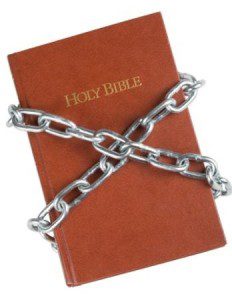
What The Bible Says About Anti-Slavery(Jonathan and Casen) and Pro-Slavery(Brad and Elliot)

No, The Bible Does Not Support Slavery (Casen and Jonathan)
 
    The bible uses the word slavery and servants in biblical times the word slave was seen as servants. In the bible a common way to pay off debts was to do work under the person you owe debts to as a servant. Traditionally religions viewed slavery in different ways, in the past there have been Christian scriptures that were used both to justify and oppose slavery. Some Christians argued that slavery was acceptable, while others saw it as a violation. Over time, many Christian denominations(examples: United Methodist, Baptist, Catholic, etc.) have denounced slavery within Christianity. These views have only changed over time according to people, religious organizations such as the Southern Baptist convention have denounced slavery in recent years “Be it further RESOLVED, That we lament and repudiate historic acts of evil such as slavery from which we continue to reap a bitter harvest, and we recognize that the racism which yet plagues our culture today is inextricably tied to the past”. The bible has not moved away from its views on slavery.” The bible has also condemned slavery in the old testament in verse Exodus 21:16.  The bible’s view overtime has changed with the new testament in that slaves are compared to prisoners(find more info here). In the New Testament of the Christian Bible there are some references to anti-slavery movements and anti-slavery positions in the verse Timothy 1:10 the New Testament comments on other issues as well but keeps its main focus in this section on anti-slavery “the sexually immoral, men who practice homosexuality, enslavers, liars, perjurers, and whatever else is contrary to sound doctrine”. This verse says that slavery is also immoral and explains that those who practice it are not uncorrupted.

    A bible verse that show that the bible is anti-slavery are Deuteronomy 24:7: "If someone kidnaps a fellow Israelite, either to make him a slave or sell him, the kidnapper must be killed. You must get rid of the evil among you". All religions have condoned slavery at one time or another. Yes, In the old testament of the bible slavery was at one time condoned by the Christian religion among others in that slave trading was a common practice and happened frequently. It has also been stated in previous bible verses that slavery was not a sin but was encouraged which is morally and ethically wrong but looking deeper in it the word slave also meant servant as well. All religions have condemned slavery at one time or another. Yes, the theological standpoint of the bible is that slavery is bad and in new testaments of the bible. 


   Some people say that the bible is pro slavery because they see it out of context or rather assumed, and not use history to further looking into the word and extend there thought process. Some arguments of people that say the bible is pro slavery are. Colossians 3:22 "22 Slaves, obey your earthly masters in everything; and do it, not only when their eye is on you and to curry their favor, but with sincerity of heart and reverence for the Lord". Majority of people that say the bible is pro slavery use Leviticus without fully understanding the word slave or servants. 

    The pro slavery side of this would be the Bible views slavery as normalized. Numerous times The Bible mentions slavery casually without ever prefacing it with words of disapproval. From this it can be surmised that slavery is acceptable. The Bible does view certain aspects of slavery as sinful, but slavery, as it was practiced in the United States in the times of the late eighteenth century to the early nineteenth century, is permissible. The Bible’s words also align with how slave owners treated their slaves. From Exodus 21:20-21: “When a man strikes his male or female slave with a rod, and the slave dies under his abuse, the owner must be punished. However, if the slave can stand up after a day or two, the owner should not be punished because he is his owner’s property.” This unambiguously states that corporal punishment against slaves is permissible, as long as the slave is not killed from the punishment. It also reaffirms that slaves are property to their owners. Furthermore, this excerpt and the surrounding context says nothing about the reason for which a slave shall be beaten, meaning that it can be reasoned that slaves can be beaten at any time for any reason as long as the beating does not result in the death of the slave.


    In conclusion, the opinions on slavery have changed over time and the views have altered in recent years. Different religions all over the world have different opinions on slavery and we are at a point when now most religions and cultures accept the fact that slavery has not always been the same. 

Links- https://mechon-mamre.org/p/pt/pt0325.htm#44 

            https://www.newsbug.info/monticello_herald_journal/lifestyle/religion/powerful-words-servants-slaves-and-their-biblical-meanings/article_bb8d19b3-ad82-50c5-ae8a-e365ee98809a.html#:~:text=The%20two%20words%20are%20distinctly,will%20and%20forced%20to%20serve 

            http://news.bbc.co.uk/2/hi/uk_news/4694896.stm 

             https://www.usccb.org/sites/default/files/flipbooks/catechism/866/ 

            https://web.archive.org/web/20160221195908/http://www.sbc.net/resolutions/899/resolution-on-racial-reconciliation-on-the-150th-anniversary-of-the-southern-baptist-convention 

               https://www.biblestudytools.com/topical-verses/bible-verses-about-slavery/#google_vignette

                Pro-Slavery side (Brad and Elliott)


To Sir Love Refelction

          My Reaction to "To Sir Love" was very interesting in how it was about teachers. The movie in the beginning showed lots o...